
Open 24 hours in every governorate
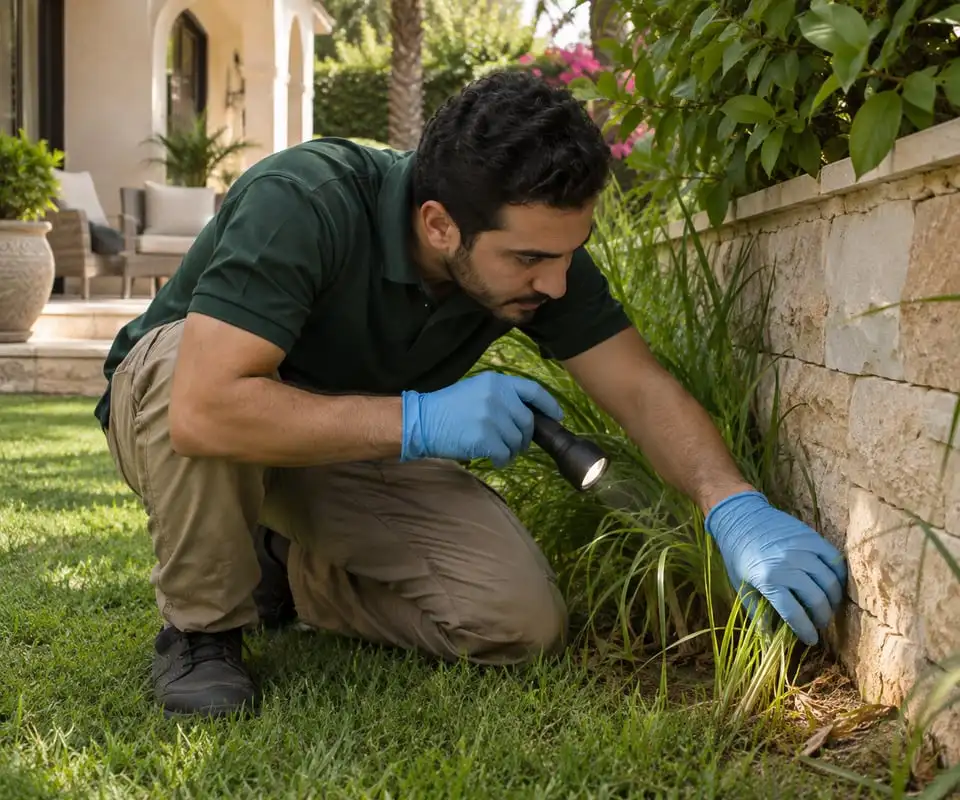
Tick controlTicks climb walls, so our inspection does not stop at the grass
Tick control starts where your dog sleeps and in the wall cracks around it, and continues in the garden if you have one. Check off what you have noticed and we will tell you the next step. If you want to get rid of ticks in an apartment or a villa, we reach all 27 governorates of Egypt.
Found something stuck to your dog’s skin? Small brown specks in wall cracks and around the garden?
Why is this happening in your home?
Ticks spread in villas and compounds that have gardens and animals. They hide in wall cracks, under baseboards, in long grass, and in shaded areas. They are more than a nuisance, because they carry disease to animals and people.
Why regular spraying does not solve it
Ticks hide in very narrow cracks and are not affected by surface spraying. They can also survive for months without food, so if you do not reach their hiding place they reappear at the first chance.
What exactly we do when we arrive
- 1Inspecting wall cracks, under baseboards, and shaded garden areas
- 2Treating hiding places, not open surfaces
- 3Treating the grass and the areas around animals
- 4Repeat treatment to cover the life cycle
- 5Recommendations for handling pets together with your vet
A tick is not an insect, and that changes where we look
Ticks are related to spiders, and adults have 8 legs. They do not fly or jump. A tick climbs onto an animal and feeds, then the female drops off and looks for a crack to lay eggs by the thousands. One type common on dogs can complete its whole life inside the home, and it climbs walls all the way to the ceiling. So you may find ticks on the second floor while you think the problem is in the garden. That is why our technician also checks these places:
- Behind picture frames and door frames
- Baseboards and carpet edges near the dog's bed
- The doghouse and the spot in the garden where the dog is tied up
- Cracks in the boundary wall and under stones along the walkways
If you find a tick stuck to your body
Ticks can transmit disease, so this calls for the right response and not panic. Do not follow the remedies you see on Facebook. If a tick is attached to your skin or your child's skin:
- Go to a doctor to remove it and look at the spot. If it is on your dog or cat, go to the vet
- Do not burn it, do not put kerosene, oil, or perfume on it, and do not squeeze it with your fingers
- Take a photo of it and write down the date you found it, because the doctor may ask
- If you get a fever, a rash, a severe headache, or unusual fatigue in the weeks that follow, go back to the doctor right away and mention the bite
The dog finished its treatment and ticks still show up
The vet clears what is on the dog, but the eggs in the crack will still hatch, and the young ones are barely visible. So the dog goes back to the same bed and gets infested again, and you think the treatment did not work. The garden needs your help too, because ticks like shade and things left lying around:
- Cut the grass and keep it short, especially along the edges and the boundary wall
- Clear piles of wood, dry leaves, and clutter away from the wall
- Clean the doghouse, and move the dog's bed if it sits by a crack or in a damp corner
- Close the gaps that street cats, street dogs, and mice come through, if you can
Kids, pets, and furnishings
Tick treatment usually happens in the places where your dog spends time, so we need to agree first on where the animal will be during the visit and after it. If you have a baby, someone pregnant, or someone with asthma or allergies in the home, tell us before the visit so we can choose the right method and duration, and ask your doctor or vet if you have concerns.
- The treatment has no odor, and in most cases you will not need to leave the home
- Keep your dog and cat away from treated areas for the full time the technician gives you
- If you grow vegetables or fruit to eat in the garden, tell us before treatment so we can agree on where we treat and for how long
How to prepare the place
- Cut the grass a day or two before the visit if you can, and clear the clutter from along the boundary wall
- Show us where your dog sleeps, where it is tied up, and the paths it walks
- Do not wash or throw out the bed before the technician sees it
- If your dog sees a vet, give us the latest instructions and the date of the next dose
Guarantee certificate
3
years
The guarantee covers the pests treated during the visit. If the same problem comes back within this period, we come and treat it.
Follow-up schedule
- 10 daysFollow-up visit to confirm the result
- 21 daysSecond follow-up to treat anything still open
- Every 2 monthsRegular follow-up for the length of the guarantee
Emergency service if any problem comes back during the guarantee
A guarantee with a schedulebeats a longer guarantee
Some companies promise 5 years and others promise 10. The question to ask is: what happens after the technician leaves?
Our answer is in writing. Three follow-up visits on set dates, plus emergency service if a problem appears at any time during the guarantee. The visit after 10 days is not a formality. That is when bed bug eggs hatch, and if it passes without treatment, the infestation comes back.
Questions about ticks
Do ticks jump or fly?
No, ticks do not jump or fly. They crawl, and they wait on grass or edges until an animal or a person passes by, then they climb on. After that they move around the body, so you usually find them in warm spots on a dog, such as the ears, the neck, and between the toes.
Can ticks pass from a dog to a person?
Yes, they can, especially in places where the dog spends time. That does not mean you have to give up your dog. What matters is that the vet treats the dog and we treat the place during the same period, and if you find a tick attached to you, see a doctor. After any long time sitting on the grass, check your body and your children, especially behind the ears, under the arms, and along the hairline.
What does a tick look like when it is full?
It looks like a small, swollen gray bead, and people sometimes mistake it for a growth on the dog's skin. When it is hungry it is flat, brown, and much smaller, and the very small ones are barely visible. If you are not sure, send us a clear photo on WhatsApp.
Can ticks live in an apartment with no garden?
Yes, they can. A dog can pick them up from the street or the club, and the type common on dogs can live and lay eggs indoors, in wall cracks and behind picture frames. So a high floor does not protect you, and the inspection has to include where the dog sleeps and the walls around it.
Do kerosene or bleach get rid of ticks?
No, and do not even try kerosene, because it is a fire hazard and hurts the animal if it touches it. Bleach cleans the surface but does not reach eggs in cracks, and mixing it with other cleaners can release a dangerous gas. Anything that goes on your dog's body needs your vet's approval.
How many visits does tick control take?
Usually more than one, because the eggs and young stages do not finish in a single day. We follow up after 10 days and after 21 days, then every two months for the full 3-year guarantee, and the technician will tell you if your place needs extra work in the garden.
We come to any governorate, 24 hours a day
We are based in Fifth Settlement and serve all 27 governorates of Egypt. See the areas
Related services
Also: Bed bugs, Cockroaches, Ants, Termites and wood borers, Mosquitoes, All pests, Geckos